




Is It Better to Lease or Finance a New Chevrolet?
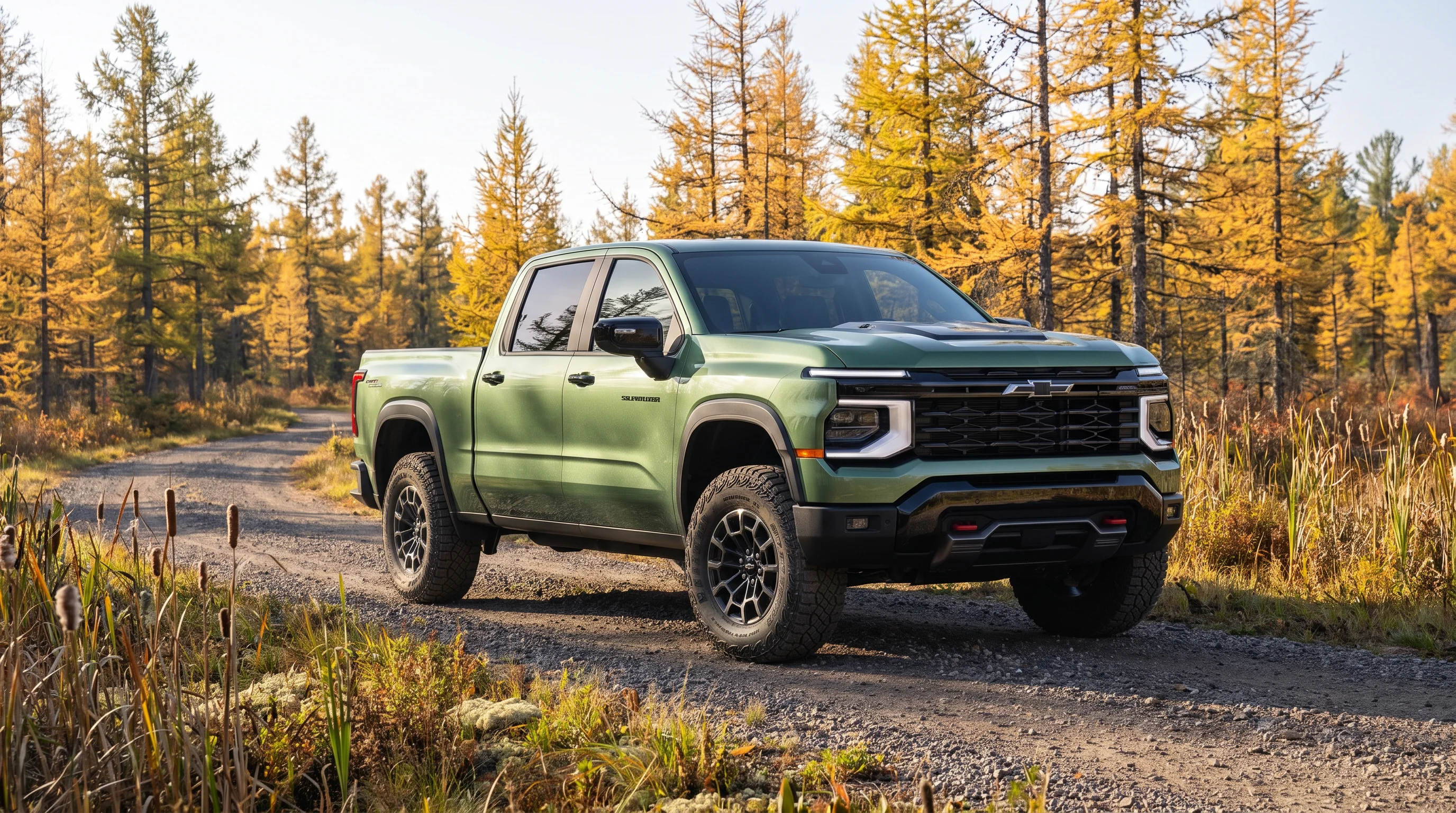
Deciding whether to lease or finance a new Chevrolet comes down to one question: do lower monthly payments matter more, or does long-term ownership? Leasing delivers lower monthly payments, shorter terms, and full factory warranty coverage for drivers who change vehicles often. Financing builds equity, allows unlimited mileage, and leaves you free to customize without a turn-in inspection waiting at the end. Drivers who want lower upfront costs and newer technology tend to lease. High-mileage commuters and long-term owners tend to buy.
At Lynch Chevrolet of Mukwonago, our team helps drivers compare payment structures on popular models like the Chevrolet Silverado 1500, Equinox, and Traverse. Put a 24-month lease next to a 60-month finance contract and the total cost of ownership extends well past the monthly payment. A lease covers the vehicle's expected depreciation over the term rather than its full purchase price, and that single structural difference drives everything else about the agreement.
Warranty coverage is one place the two paths diverge in practice. New Chevrolet models carry a 3-year/36,000-mile bumper-to-bumper limited warranty, so a two- or three-year lease typically runs its entire term under factory protection, as long as the vehicle stays inside the warranty mileage limit.‖ A longer finance term outlives that coverage.
‖ This information is provided for general educational purposes only and does not constitute legal advice. Warranty coverage depends on the specific terms of your vehicle's warranty agreement. Consult your owner's manual or a qualified legal professional for guidance on your individual situation.
Choosing between these paths means weighing your annual mileage, your trade-in plans, and how much monthly cash flow you want to commit. To talk it through, call our team at 262-368-1045 or stop by our Mukwonago showroom.
Cited Source: Chevrolet Owners — Limited Warranty — bumper-to-bumper coverage term
Leasing vs. Buying a Chevy: The Core Difference
The structural difference is simple. A lease pays for the vehicle's projected depreciation over a set term. Financing pays for the full purchase price and establishes legal ownership. Lease agreements run through GM Financial, where the lessee returns the vehicle or exercises a purchase option at contract maturity. Traditional financing transfers title to the buyer once the lender balance is paid in full.
| Factor | Leasing | Financing |
|---|---|---|
| What you pay for | The vehicle's projected value loss over the term, plus finance charges and fees | The full vehicle purchase price, amortized over the loan |
| Relative monthly payment | Lower on the identical vehicle | Higher on the identical vehicle |
| Available term | 24 to 48 months through GM Financial; advertised Chevrolet specials are usually 24 or 36 | 36 to 84 months through GM Financial |
| Who holds title | GM Financial holds it for the full term | Transfers to you once the lender balance is paid in full |
| Equity | None, unless the end-of-term retail value rises above the contractual buyout residual | Transferable equity builds as the loan balance drops |
| Modifications | Must be returned factory-original; aftermarket work reversed before turn-in | Bed liners, lift kits, upgraded exhaust, trailer hitches all permitted |
| At end of term | Turn it in, move into a new Chevrolet lease, or buy it at the fixed residual price | Keep it and drive payment-free, sell it privately, or trade it in at any time |
How a lease payment is calculated
During a lease, your monthly payments cover the gap between the vehicle's initial cost and its predicted residual value at the end of the term, plus finance charges and administrative fees. If a compact SUV holds 60% of its value after 36 months, lease payments cover only the 40% it lost. Financing instead amortizes 100% of the vehicle principal across the loan term.
That is also why the two paths end so differently. A lease closes with a decision: hand the keys back, turn in the vehicle and start a new one, or buy it at the residual price already written into your contract. A finance contract simply ends, and the vehicle is yours.
Drivers around Big Bend and Waterford who tow, haul equipment, or plan to add aftermarket gear generally land on financing, since nothing has to come back off the vehicle at the end.
Cited Source: GM Financial — Lease-End FAQ — purchase option, residual buyout and lease-end options | GM Financial — U.S. Securitization Platforms, August 2026 — available lease and loan terms
How Monthly Payments and Factory Offers Compare
Monthly lease payments usually land lower than finance payments on the identical Chevrolet, because the lease covers only term depreciation rather than full principal. Factory lease specials lower your initial cash outlay by applying manufacturer incentive cash and subsidized money factors. Finance promotions work differently: they cut the long-term cost of borrowing through a reduced annual percentage rate.
Both kinds of offers change on a monthly cycle, and the terms attached to them change with them. Rather than quote figures that expire, we keep the current programs posted. Review the live Chevrolet offers, then run the numbers yourself with our payment calculator before you come in.
Suburban commuters driving daily into Milwaukee from Franklin often find a 24-month lease on a compact crossover gives them a predictable payment while staying well inside a standard mileage allowance. Comparing true drive-off cost means looking at everything due at signing, including acquisition fees, any down payment, and initial licensing paperwork.
Cited Source: GM Financial — Your Top Lease Questions Answered — lease structure and end-of-term liability
What Credit Score Do You Need for Chevy 0% APR and Top Lease Deals?
Chevrolet's best promotional rates, including 0% APR and advertised national lease specials, are reserved for what the manufacturer calls well-qualified buyers. Chevrolet does not publish a minimum credit score for these programs. Lenders sort applicants into credit tiers, and the top tier is commonly understood across the auto finance industry to start somewhere around a 720 FICO score, though each lender sets its own threshold.
Lower tiers are not shut out. GM Financial is a full-spectrum lender and uses custom scorecards to underwrite loans and leases across the credit spectrum, weighing credit history, debt-to-income ratio and the total amount financed alongside the score itself. What changes as risk rises is the rate, the money factor, and the structure of the deal. Applications in tiers below prime generally require proof of income and verification of employment, and a larger down payment or trade-in equity can offset a thinner credit file.
So your paperwork matters as much as your score. Bringing current pay stubs, proof of residency, and proof of active auto insurance speeds the underwriting review. Buyers with scores in the 500s or 600s frequently secure approval by demonstrating steady employment and putting more money down.
Cited Source: GM Financial — U.S. Securitization Platforms, August 2026 — full-spectrum underwriting, custom scorecards, and income and employment verification below prime
Which Payment Option Fits High-Mileage Drivers?
Financing is the better fit for high-mileage drivers, because every lease carries an annual mileage cap and every mile past it is billed at turn-in. Advertised GM lease specials are frequently structured as ultra-low-mileage contracts at 10,000 miles per year, which suits a short urban commute. Higher allowances can be written into the contract instead, and buying the miles upfront is almost always cheaper than paying the overage later. Drivers who log serious highway miles sidestep the issue entirely with a purchase loan and unlimited mileage.
| Consideration | Leased Chevrolet | Financed Chevrolet |
|---|---|---|
| Annual mileage | Capped at the contracted allowance; advertised specials are commonly 10,000 miles per year | Unlimited, with no end-of-term adjustment |
| Excess mileage charge | Commonly $0.25 per mile on current GM lease programs; the rate that applies to you is the one printed in your lease agreement | None |
| Condition at term end | Returned to factory wear-and-tear standards, with a pre-return inspection | Entirely at the owner's discretion |
| Maintenance | Scheduled factory maintenance required by contract; deferred service becomes a wear charge | Owner controls the timeline and answers to no inspection |
| Buying out of the problem | Purchasing the vehicle at term end avoids excess mileage and wear charges entirely | Not applicable — you already own it |
Maintenance obligations split the same way.‖ A lease contract requires you to keep up with scheduled factory maintenance, because deferred service turns into wear-and-tear charges at turn-in. An owner sets their own service timeline and answers to no inspection. Drivers covering more than 15,000 miles a year protect themselves financially through ownership, avoiding end-of-lease mileage charges and keeping full control of the maintenance schedule.
‖ This information is provided for general educational purposes only and does not constitute legal advice. Warranty coverage depends on the specific terms of your vehicle's warranty agreement. Consult your owner's manual or a qualified legal professional for guidance on your individual situation.
Cited Source: GM Financial — Lease-End FAQ — excess mileage billed at the rate listed in your agreement, and avoiding wear and mileage charges by purchasing the vehicle
Common Questions About Chevrolet Leasing and Financing
Do you own the vehicle at the end of a Chevy lease?
You do not automatically own the vehicle at the end of a Chevrolet lease. A lease grants temporary operational rights for the agreed contract term. At maturity you can turn in the vehicle, lease a new Chevrolet, or purchase the vehicle outright by paying the contractual residual buyout price specified in your original lease agreement.
Are routine maintenance services included in a Chevrolet lease?
Chevrolet includes one complimentary maintenance visit within the first 12 months of vehicle delivery, covering an engine oil and filter change, a four-tire rotation, and a multi-point inspection.‖ Everything after that, including tire replacement, brake service, and fluid changes, is the driver's responsibility throughout the lease term.
‖ This information is provided for general educational purposes only and does not constitute legal advice. Warranty coverage depends on the specific terms of your vehicle's warranty agreement. Consult your owner's manual or a qualified legal professional for guidance on your individual situation.
What happens if you exceed your mileage allowance on a Chevrolet lease?
Exceeding the annual mileage allowance in your lease agreement results in excess mileage fees assessed when you turn the vehicle in. GM Financial bills those miles at the per-mile rate listed in your agreement, commonly $0.25 per mile on current GM lease programs. You can avoid the charge by purchasing additional mileage upfront when the lease is structured, or by buying the vehicle at term end.
Can you customize or add accessories to a leased Chevrolet vehicle?
Leased Chevrolet vehicles must be returned in factory-original condition at contract expiration. Permanent aftermarket modifications such as suspension lifts, body alterations, or custom paint have to be fully reversed before turn-in to avoid wear-and-tear charges.
What documents are required when applying for Chevrolet financing or leasing?
Applying for a Chevrolet lease or purchase loan generally requires valid government-issued identification, current proof of income such as recent pay stubs or tax documents, proof of residency such as a recent utility bill, and proof of active auto insurance. Applications in credit tiers below prime generally require proof of income and verification of employment before GM Financial funds the contract.
Cited Source: GM Financial — Lease-End FAQ — lease-end options and excess mileage | Chevrolet Complete Care — complimentary first maintenance visit | GM Financial — U.S. Securitization Platforms, August 2026 — verification requirements below prime
Choosing Your Path at Lynch Chevrolet of Mukwonago
Choosing between leasing and financing means lining up your driving habits, your monthly budget, and your long-term ownership goals with the structure that fits all three. Leasing delivers lower monthly payments, more frequent access to current vehicle technology, and continuous factory warranty coverage. Financing delivers unlimited mileage, equity, and full freedom to modify the vehicle.
Our finance team provides clear side-by-side payment comparisons built around how you actually drive. Whether you are weighing a 24-month lease on an efficient crossover or a longer finance term on a full-size pickup, we will walk you through the current factory programs and show you what each one costs over the life of the agreement.
Stop by our Mukwonago location to drive the newest Chevrolet lineup, or call a finance specialist directly at 262-368-1045 to get started.
Disclaimers
‖ This information is provided for general educational purposes only and does not constitute legal advice. Warranty coverage depends on the specific terms of your vehicle's warranty agreement. Consult your owner's manual or a qualified legal professional for guidance on your individual situation.
Cited Sources
- Chevrolet Owners — Limited Warranty — bumper-to-bumper coverage term
- Chevrolet Complete Care — complimentary first maintenance visit
- GM Financial — Lease-End FAQ — lease-end options, residual buyout, excess mileage and wear charges
- GM Financial — Your Top Lease Questions Answered — lease structure and end-of-term liability
- GM Financial — U.S. Securitization Platforms, August 2026 — available lease and loan terms, full-spectrum underwriting, verification requirements